Case study
Music Finland Core
Built in 2015 and still running strong: 100,000+ records on Finnish music, searchable in one place. I still maintain it.
- Year
- 2015
- Role
- Full‑stack development, 2015 to today
- Client
- Music Finland
- Stack
- Ruby on Rails, Algolia, Action Cable
Context
I built Music Finland Core in 2015. It is still running strong today, and I still maintain it.
What it is
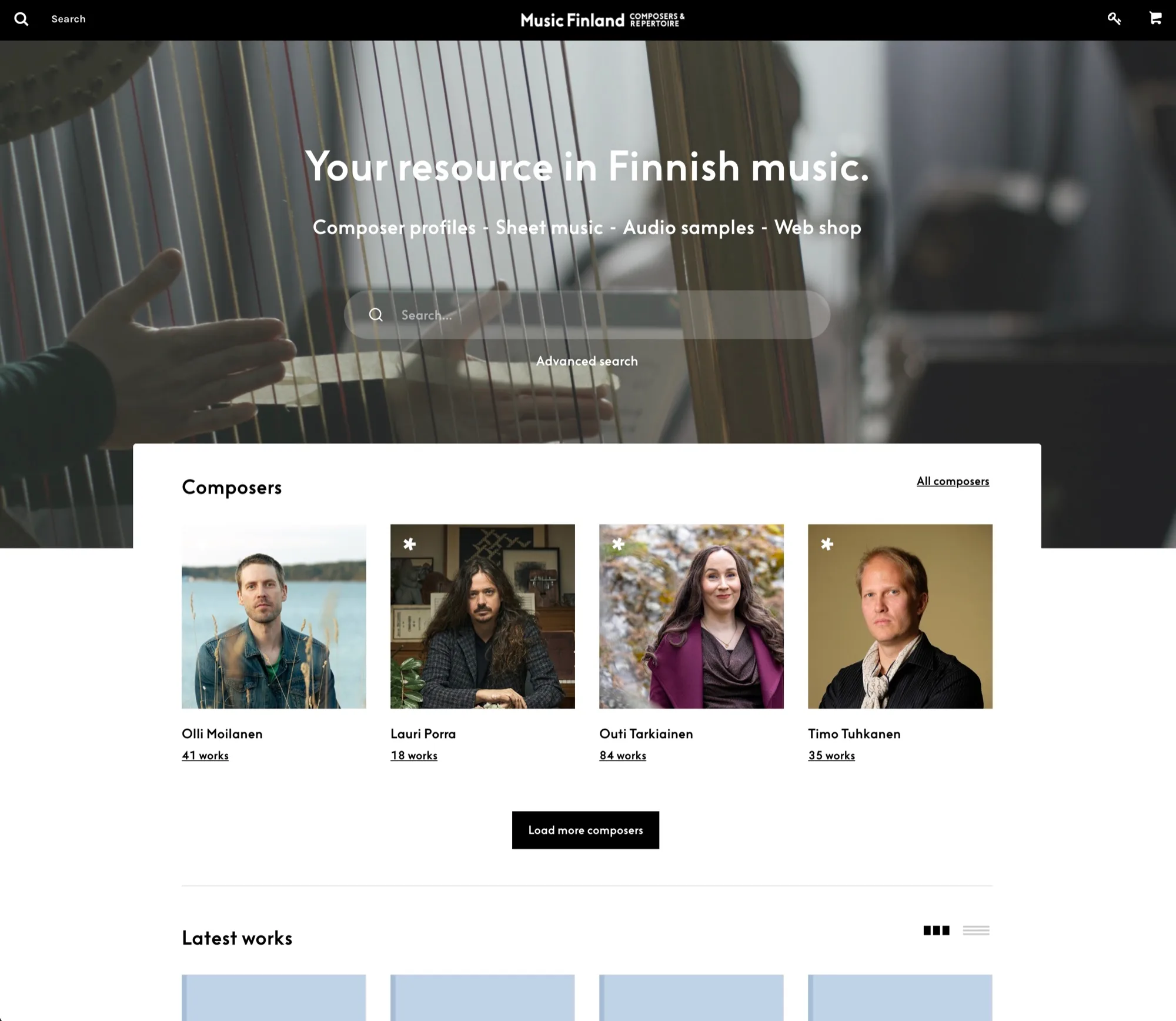
Music Finland promotes Finnish music abroad, and Core is its catalogue: composer profiles, works, sheet music, audio samples and a web shop, all reachable from one search field. Under the hood it manages, searches and filters more than 100,000 records.
Build
- Rails on the back end, with faceted search across composers, works and editions on Algolia (originally Elasticsearch), so search stays fast at that scale.
- A single‑page end‑user interface on the front, with search and advanced filtering as the primary navigation.
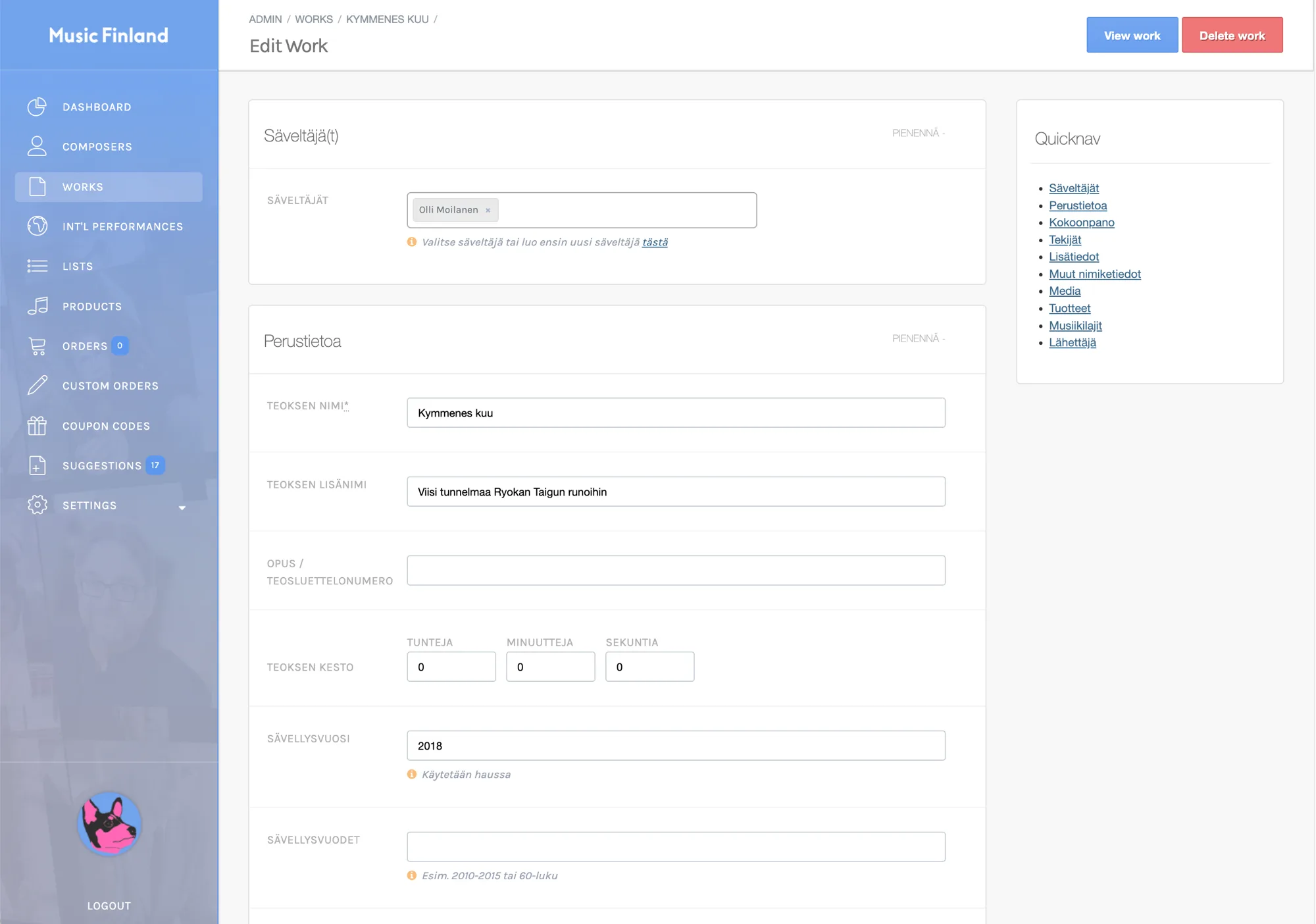
- Realtime administration over Action Cable, so editors see catalogue changes without reloading.
Still running, still maintained
Most agency projects are replaced within a few years. Core has been in continuous production since 2015, serving Music Finland’s catalogue to publishers, performers and researchers, and I have kept maintaining it ever since: Rails and dependency upgrades, moving search from Elasticsearch to Algolia, and the occasional new feature. A decade in, the original architecture has needed evolution, not replacement.